
Batik Uttariya
Sumitra NarayanSantiniketan, India, 1980s
- Materials & techniques
- Cotton, batik; natural dyes
- Collection
- Shevanti Narayan
Object details

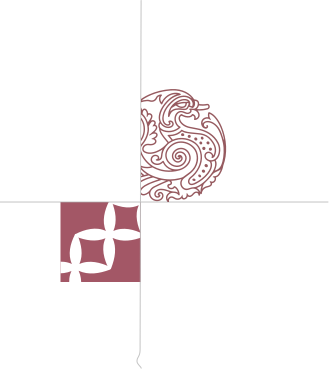
This batik uttariya was made by Sumitra Narayan in the 1980s, using natural dyes.
Narayan, who also illustrated the Constitution of India, developed a distinctive approach to batik rooted in the visual traditions of Santiniketan while deliberately moving away from the designs that had become standardised through the commercial production of Karu Sangha.
The textile uses alpona-inspired motifs, arranged across the surface in a fluid and carefully controlled composition. Significantly, the batik is devoid of the characteristic cracks often associated with the technique. Narayan disliked the formation of cracks and deliberately avoided them, allowing the motifs and their outlines to remain clear and uninterrupted. This gives the textile a distinct visual character, in which the precision of the drawn forms takes precedence over the textural effects of crackle.
Her approach demonstrates an individual engagement with batik at a moment when Santiniketan designs were increasingly being reproduced for the commercial market. By returning to the alpona vocabulary while rejecting both the conventions of crackle and the designs institutionalised through Karu Sangha, Narayan developed a more personal language of textile design—one that retained the artistic inheritance of Santiniketan while allowing for greater control over the medium.